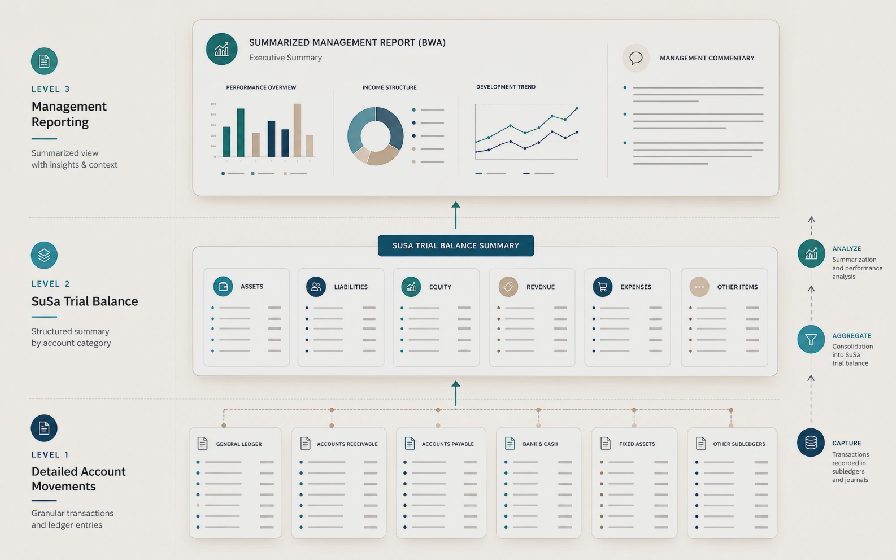

The BWA is a common monthly report in Germany. It summarizes revenue, costs and profit. For simple internal discussions, that may be enough. But once the figures are used for financing, reporting, advisory boards, investors or strategic decisions, the requirements increase. If you first want the broader context, read the guide to the German BWA report.
A BWA alone does not always explain whether specific accounts contain unusual movements, whether accruals are missing, whether receivables or payables are problematic, or whether profit is distorted by one-off effects. The SuSa, or trial balance, provides account-level detail. That is where many red flags become visible.
Typical cases: The BWA shows profit, but receivables rise strongly. Revenue is high, but cash collection lags. Personnel costs look unusual because accruals are missing. The monthly result is positive, but open items or liquidity point in the opposite direction. In those cases, the BWA should not be read in isolation.
This check is not an audit, tax review or financing approval. It supports a structured management and plausibility review.