
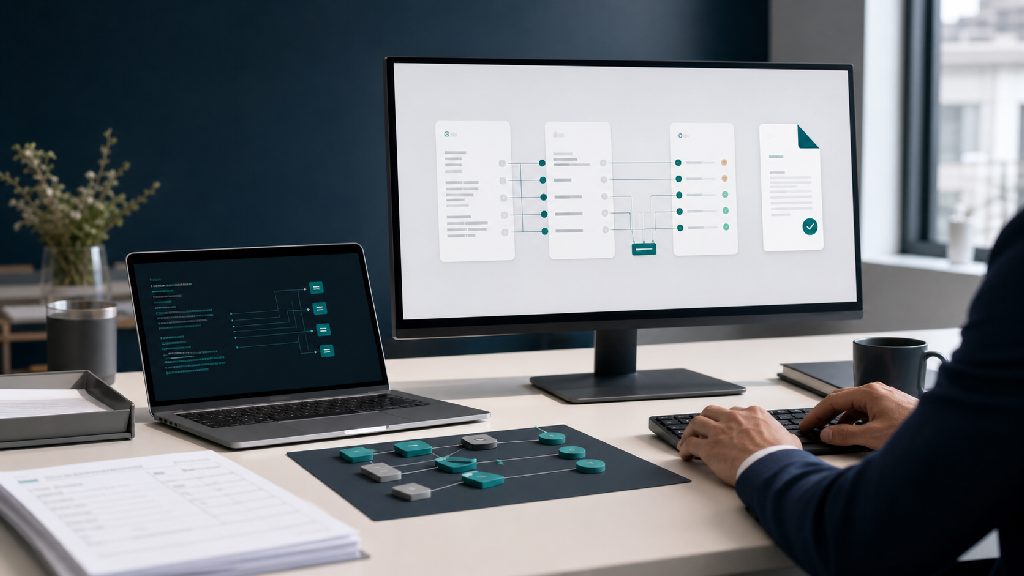
Short answer: conversion needs semantics
A PDF can look like an invoice and still contain too little structured meaning. Safe conversion starts with clear fields, mapping, validation and business approval.
E-invoice conversion matrix
| Source | Target | Assessment |
|---|---|---|
| ERP or billing data | XRechnung, ZUGFeRD, UBL/CII | Best path when master data, tax logic and line items are complete. |
| ZUGFeRD/Factur-X | Extract XML or create another EN 16931 profile | Often possible if profile, version and embedded data fit. |
| XRechnung | Visual PDF or accounting import | Rendering and processing are possible, but semantics must remain unchanged. |
| Simple PDF | XRechnung or ZUGFeRD | Risky: OCR or parsing may find data, but semantics and mandatory fields are often missing. |
| Excel or manual list | E-invoice | Useful only when fields are clearly mapped, validated and approved. |
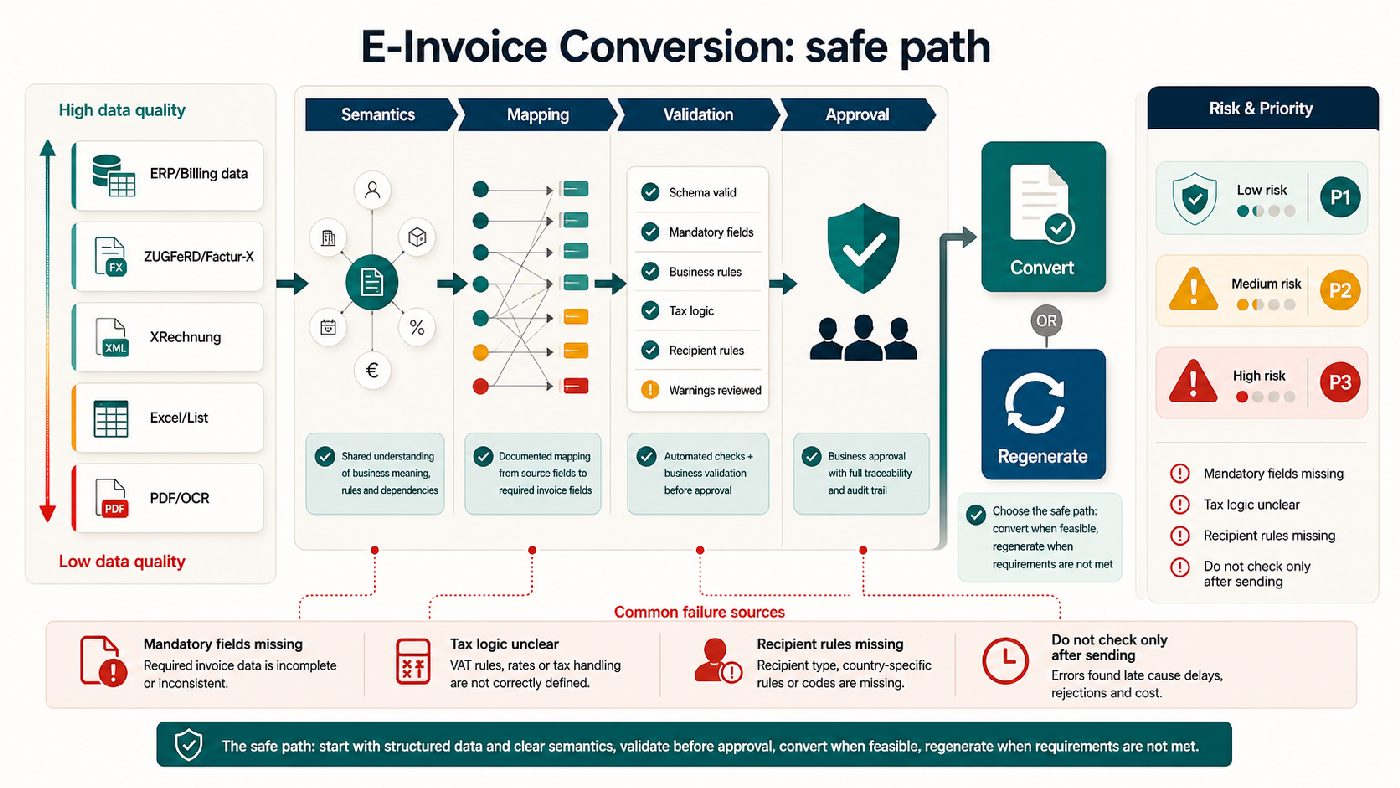
Accessible description and data
The matrix shows which source data is suitable for reliable conversion and where semantics, mapping, validation and approval need control.
Safe conversion needs four steps
Clarify semantics
Invoice date, service date, tax rate, references, advances and line items must be unambiguous.
Document mapping
Every source field needs a target and a rule for missing or conflicting data.
Validate
Syntax, mandatory fields and business rules must be checked before sending or archiving.
Approve the result
The generated file must match the original invoice from a business perspective.
Common conversion failures
| Failure | Impact | Control |
|---|---|---|
| PDF is read only with OCR | Mandatory fields and tax semantics remain uncertain. | Connect source data or invoice logic directly. |
| Mapping rules are undocumented | Corrections depend on individuals and become hard to audit. | Document field mapping with exceptions and approval rules. |
| Validation happens after sending | Errors surface at the recipient or in accounting. | Add technical and business checks before release. |
Example: turning invoice data into a reviewable e-invoice
A safe conversion path starts with business-clear source data. This example shows when transformation is plausible and when it should be rejected deliberately.
| Source data | Mapping assumption | Check / reject condition |
|---|---|---|
| Customer, VAT ID, invoice address, contact person | Master data comes from CRM or billing; recipient requirements remain a separate check. | Reject if mandatory address, buyer reference or recipient route is missing. |
| Service period 01/06-30/06/2026, invoice date 05/07/2026 | The service period is held at line-item level; invoice date remains a header field. | Reject if the service period exists only as text in a PDF body. |
| Line item June advisory, 6 person-days, EUR 1,250, VAT 19% | Quantity, unit, net amount, tax category and tax rate are mapped explicitly. | Reject if OCR finds amounts but unit, tax logic or line-item relationship is missing. |
Next steps for safe conversion
Check the data basis first and use the checklist to set up mapping, validation and approval in a way that is technically and commercially reviewable.

E-invoicing Check
Check source data, format path and workflow together
The check shows whether conversion is enough or invoices should be regenerated from structured source data.
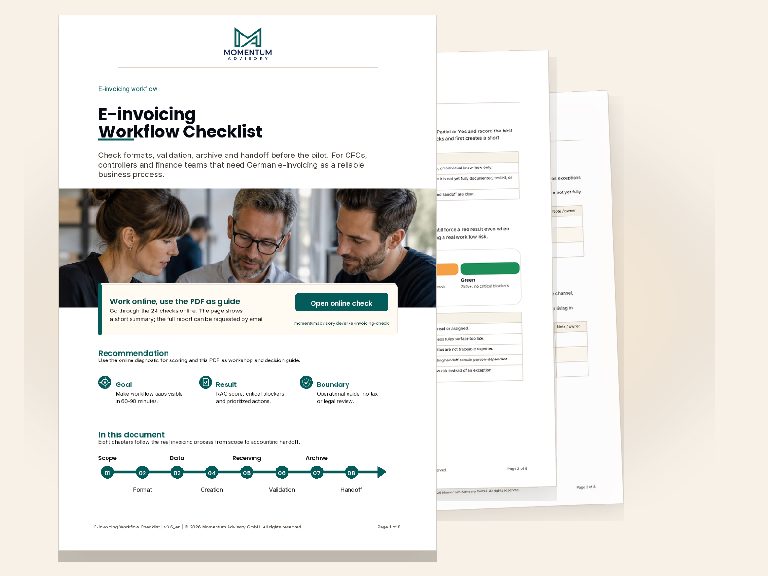
E-invoicing workflow checklist
PDF guide for mapping, validation, archive and handoff
A compact working base to make conversion steps, validation rules and ownership traceable.

Heinrich Ruhwasser
Heinrich Ruhwasser is a seasoned entrepreneur and advisor with more than twenty years of experience in digital transformation, corporate strategy, and succession planning. As an expert in business growth, he has successfully guided a wide range of companies through complex transformation initiatives. His core area of expertise is increasing enterprise value, where he applies his deep knowledge to long-term planning and seamless business succession. Heinrich’s combination of visionary thinking and hands-on experience makes him a trusted advisor to executives and business owners.
How would you rate this article?
Did this article help, or is something missing? Your feedback goes straight into improving our articles.
We review every response and use it to improve both content and reading flow.
Related reading

E-Invoicing Formats in Europe: EN 16931, UBL, CII, Peppol, XRechnung, ZUGFeRD and KSeF
A practical overview of relevant European e-invoice formats, standards and national systems without thin country pages.

E-Invoicing in Germany: obligations, formats and workflow
What companies need to know about German e-invoicing: 2025 obligation, XRechnung, ZUGFeRD, receiving, validation, archiving and practical next steps.
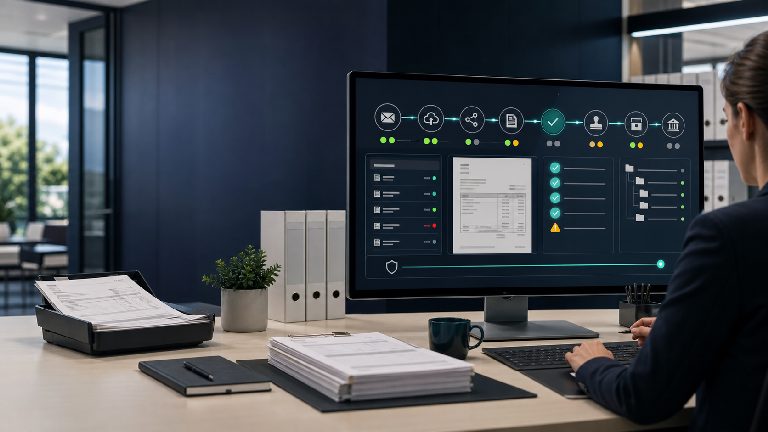
Receiving, validating and archiving e-invoices in Germany
How companies receive, visualise, validate, approve, archive and hand off structured German e-invoices to accounting.