

Short answer: ViDA is a future frame for invoice data
For German companies, the next practical step is usually e-invoicing readiness. ViDA shows why data quality, tax logic and traceable status should be designed well now.
ViDA timeline from a company perspective
| Timing | Meaning |
|---|---|
| 2025 | ViDA was adopted at EU level and entered into force in April 2025. |
| From 2030 | Cross-border B2B transactions are expected to move into digital reporting requirements. |
| By 2035 | Existing national real-time reporting systems are expected to align with the EU framework. |
| Today | Companies should improve invoice data quality, format capability and process traceability. |
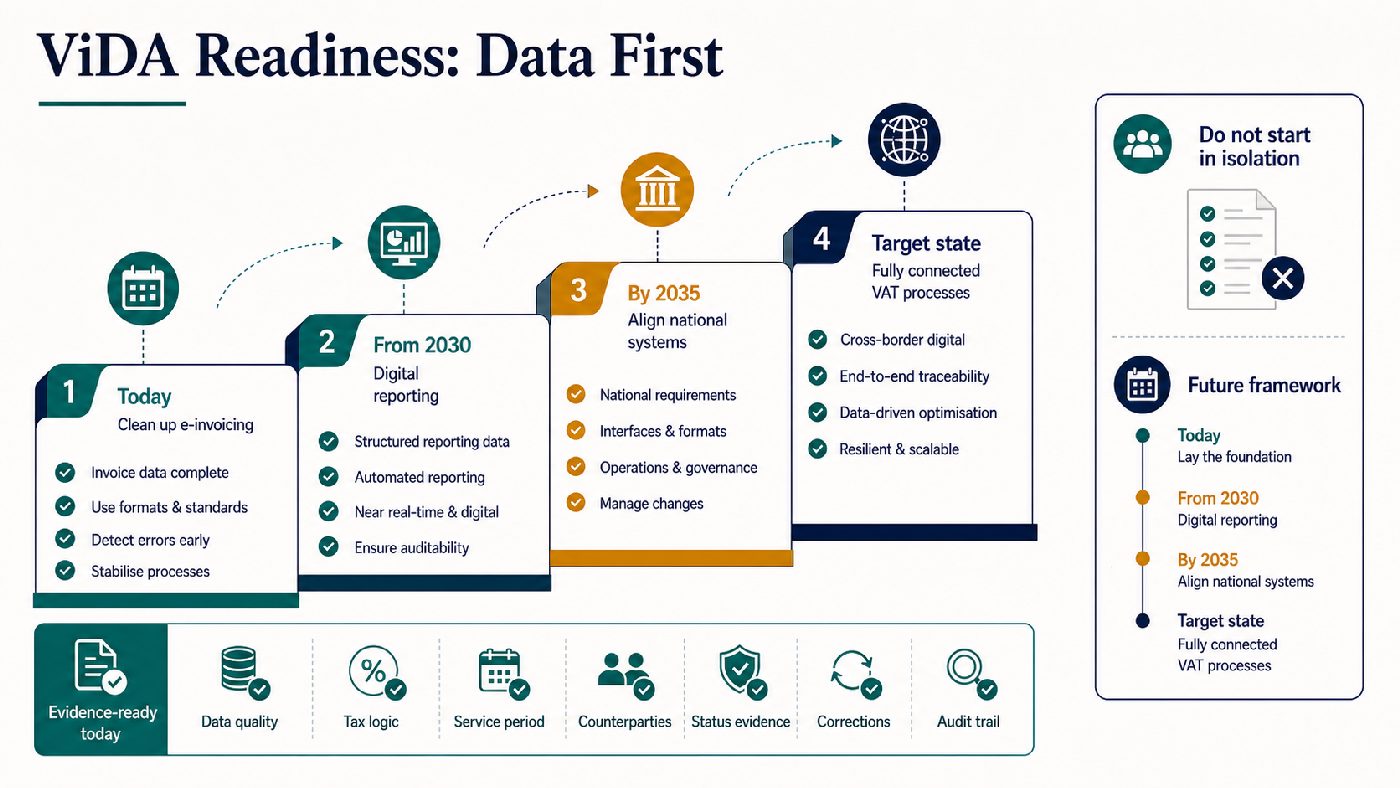
Accessible description and data
The visual positions ViDA as a readiness ladder from e-invoicing through later digital reporting to national system alignment, making the required data and evidence domains visible.
Why ViDA belongs in e-invoicing architecture now
If e-invoicing is treated only as a mandatory format, companies often build a minimal process. If ViDA is considered as context, the team checks data quality, tax codes, performance period, counterparties, corrections and status logic in a way that is more resilient for later digital reporting requirements.
ViDA is a future frame for reliable invoice data
For most companies, the work does not start with a separate ViDA project. It starts with clean e-invoicing processes: structured mandatory fields, clear tax logic, status evidence and reviewable handoffs.
Frequently asked questions about ViDA and e-invoicing
Do German companies need a separate ViDA project immediately?
Usually not. For many companies, the first priority is to generate, receive, validate and archive e-invoices cleanly. ViDA is a useful review frame so those processes do not need to be rebuilt later.
How is ViDA connected to e-invoicing?
ViDA shifts attention toward structured, usable invoice and tax data. E-invoicing is therefore not only a format change, but also a data quality and process control topic.
Why should KSeF be reviewed separately?
KSeF is a Polish platform and reporting context with its own technical requirements. Companies with Polish exposure should not treat it like a normal invoice format.
Source note
The ViDA framing is based on official EU information on the VAT in the Digital Age package. Dates, national implementation and detailed obligations should be rechecked before operational decisions.

Heinrich Ruhwasser
Heinrich Ruhwasser is a seasoned entrepreneur and advisor with more than twenty years of experience in digital transformation, corporate strategy, and succession planning. As an expert in business growth, he has successfully guided a wide range of companies through complex transformation initiatives. His core area of expertise is increasing enterprise value, where he applies his deep knowledge to long-term planning and seamless business succession. Heinrich’s combination of visionary thinking and hands-on experience makes him a trusted advisor to executives and business owners.
How would you rate this article?
Did this article help, or is something missing? Your feedback goes straight into improving our articles.
We review every response and use it to improve both content and reading flow.
Related reading

E-Invoice Conversion: PDF, XRechnung, ZUGFeRD and structured data
Why safe e-invoice conversion starts with structured source data and why PDF-to-XRechnung is often risky.

E-Invoicing Formats in Europe: EN 16931, UBL, CII, Peppol, XRechnung, ZUGFeRD and KSeF
A practical overview of relevant European e-invoice formats, standards and national systems without thin country pages.

E-Invoicing in Germany: obligations, formats and workflow
What companies need to know about German e-invoicing: 2025 obligation, XRechnung, ZUGFeRD, receiving, validation, archiving and practical next steps.